How African Language Speakers Can Get Paid to Build Better AI
Artificial intelligence is only as capable as the data it learns from. And right now, that data has a significant gap. The vast majority of AI systems — from voice assistants and speech recognition tools to machine translation platforms and chatbots — have been built primarily on European and Asian language data. African languages, despite their extraordinary richness, diversity, and the hundreds of millions of people who speak them, remain critically underrepresented.
That gap is now generating real, paid opportunities for African language speakers worldwide. Tech companies, research institutions, and AI startups are actively recruiting native speakers to help build more inclusive, more accurate, and more globally relevant AI systems — and you don’t need a technology background to qualify.
Why AI Cannot Advance Without African Languages
AI tools don’t understand language the way humans do. They learn by processing enormous volumes of examples — spoken recordings, written text, translated phrases, annotated sentences — until patterns emerge that allow them to recognise speech, generate responses, and translate meaning.
Without sufficient African language data, these systems simply fail African users. A voice assistant that cannot understand a Yoruba accent is useless to a Yoruba speaker. A translation engine trained on limited Swahili data produces inaccurate, sometimes offensive results. A healthcare chatbot that doesn’t process Amharic grammar correctly could give dangerous misinformation to Ethiopian patients.
The three areas generating the most urgent demand are voice recognition — training AI to accurately understand how African languages sound when spoken naturally; natural language processing (NLP) — helping systems understand African grammar structures, tonal distinctions, idiomatic expressions, and cultural context; and dataset and corpus development — building the foundational text and voice databases that machine learning models depend on.
AI cannot be genuinely global without African voices. The companies building these systems know it, which is why recruitment budgets for African language projects are growing rapidly.
Who Is Hiring African Language Speakers for AI Work
The opportunity isn’t limited to household technology names, though they are certainly part of it. Google, Microsoft, Meta, and Amazon are all expanding their African language capabilities and regularly commission data collection projects requiring native speakers. These companies work through both direct recruitment and contracted agencies, creating multiple entry points for African linguists.
Beyond the tech giants, AI startups specialising in language technology and localisation are significant employers. Many focus specifically on underserved languages, making African language expertise central to their entire business model rather than a secondary priority.
Research universities and academic institutions also run funded African language projects — sociolinguistic studies, language documentation initiatives, and NLP research programmes that require native speakers as both participants and professional contributors.
Outsourcing agencies contracted to deliver AI training data on behalf of larger companies represent another consistent source of work. These agencies recruit at scale, often run multiple concurrent projects, and provide accessible entry points for those new to the industry.
What the Work Actually Involves
If you’re imagining complex programming or technical engineering, set that aside entirely. The majority of AI language roles require native speaker ability and attention to detail — not coding skills.
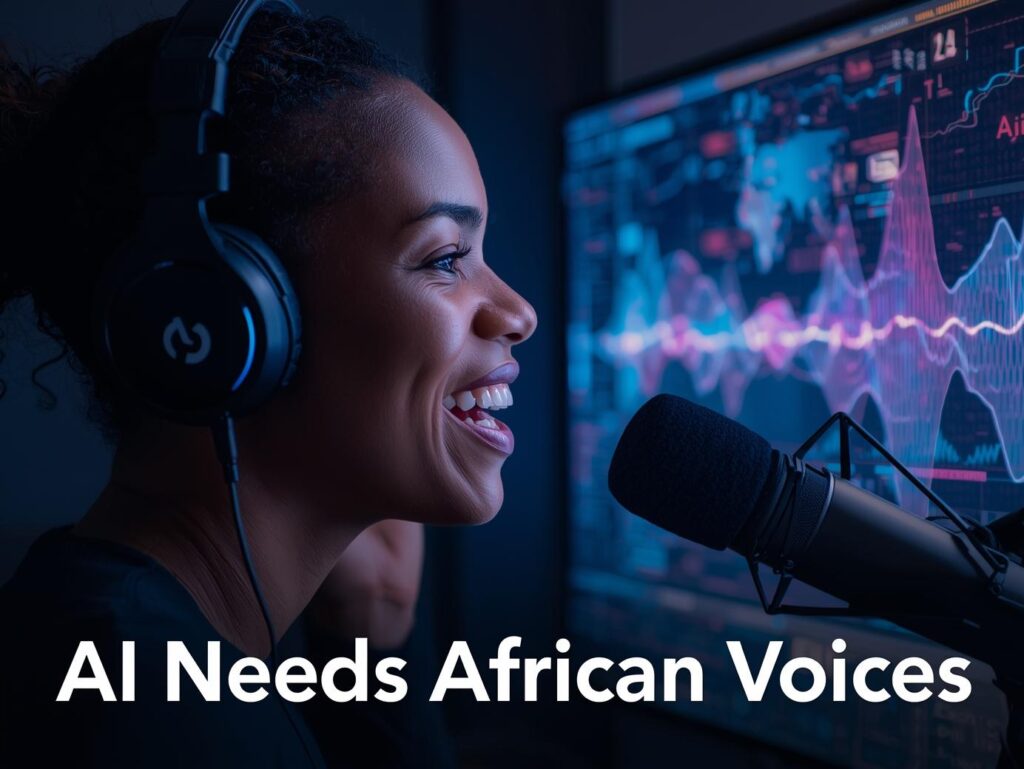
Voice recording is among the most accessible entry points. Projects ask native speakers to read sample sentences, hold short conversations, or provide natural speech samples in their language. These recordings teach AI systems how the language sounds across different speakers, accents, and contexts.
Transcription involves listening to recorded audio and writing down exactly what is said, in the original language. Accuracy is critical — AI models learn from these transcriptions, so errors in your work become errors in the system.
Data annotation requires tagging and classifying language data — marking parts of speech, identifying tone or sentiment, labelling named entities, or categorising phrases. This work helps AI understand the structure and meaning of language, not just its surface appearance.
Cultural validation is among the most intellectually engaging roles available. Reviewers assess AI outputs — translations, generated text, spoken responses — to determine whether they are not only linguistically accurate but culturally appropriate, contextually natural, and free from the kind of subtle errors that only a native speaker would catch.
Most of these roles are fully remote, project-based, and flexible — making them suitable as supplementary income, freelance work, or the foundation of a full professional career in AI language services.
What Skills You Need to Get Started
The core requirement is native or near-native fluency in your African language combined with reliable English communication skills, since most project management, instructions, and platforms operate in English.
Beyond language ability, the qualities that make you competitive are accuracy and attention to detail — AI models are only as good as the data they learn from, and sloppy work creates compounding errors; consistency and reliability — long-term projects value contributors who deliver on time and maintain quality across extended engagements; and basic digital literacy — comfort navigating online platforms, uploading files, using communication tools, and following written instructions.
Formal linguistic training is not required for most entry-level projects, but it is a genuine advantage. Candidates who understand linguistic concepts — phonetics, morphology, syntax — can take on more complex annotation and validation work, accessing higher-paying project tiers.
A stable internet connection is essential for remote work. Most projects can be completed on a standard laptop or desktop computer without specialist equipment.
How to Access AI Language Projects
The main challenge for most African language speakers isn’t qualification — it’s knowing where to find legitimate, well-paying projects and how to present themselves effectively to project managers.
Register with the Linguistic Pathways Directory as your first step. Organisations sourcing African language talent for AI projects actively search this directory, making registration one of the most direct routes to project opportunities without competing on generic freelance platforms.
Create profiles on specialist platforms including Appen, Lionbridge, and Toloka, which regularly post African language AI projects and work with contributors across multiple time zones and locations.
Search language-focused job platforms such as ProZ, which lists translation, transcription, and annotation work, and filter specifically for African language postings.
Be proactive with emerging opportunities. Sign up for mailing lists from AI language companies, join professional groups for African linguists on LinkedIn, and respond quickly to new project postings — early applicants consistently access the best rates and longest contracts.
The demand for African language AI contributors is growing faster than supply. Positioning yourself now, before the market matures, gives you a significant first-mover advantage in terms of building relationships, reputation, and consistent project access.
Your Voice Is Shaping the Future of Technology
Every voice recording you contribute trains a system that will serve millions of users. Every translation you validate improves tools that communities across Africa and the diaspora depend on. Every annotation you complete helps AI understand languages that have been ignored by mainstream technology for too long.
This work carries genuine significance beyond the income it generates. African language speakers who contribute to AI development are actively shaping how technology represents and serves their communities for decades to come.
Register with Linguistic Pathways today and connect with AI projects that need exactly what you have — your language, your cultural knowledge, and your voice.