
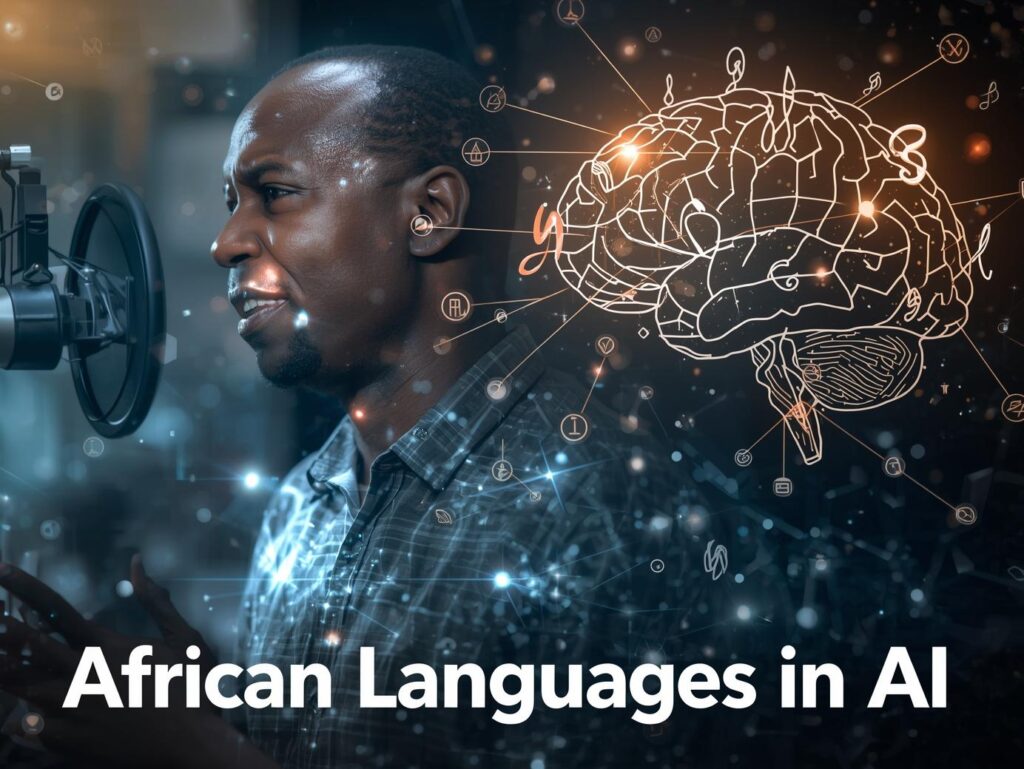
The global AI industry is experiencing a major shift. Tech giants like Google, Meta, Microsoft, and OpenAI are investing billions to make artificial intelligence more inclusive and multilingual. At the center of this transformation? African languages — spoken by over 1 billion people worldwide yet critically underrepresented in digital technology.
For African linguists, translators, and interpreters, this represents more than technological progress. It’s a career opportunity in one of the fastest-growing sectors globally. If you speak an African language, you possess skills that tech companies desperately need right now.
Why Tech Companies Are Investing in African Languages
Most AI systems today — including voice assistants like Siri and Alexa, translation platforms like Google Translate, and chatbots like ChatGPT — are trained predominantly on English, Spanish, Chinese, and other widely digitized languages.
African languages remain severely underrepresented. Despite hundreds of millions of speakers across Swahili, Yoruba, Hausa, Zulu, Amharic, Igbo, and dozens of other languages, quality digital content and training data are scarce.
This creates significant problems:
Limited accessibility: Millions of African users cannot fully access digital services in their native languages.
Poor accuracy: When African languages are available in apps, the translations are often incorrect or culturally inappropriate.
Missed market opportunities: Companies lose potential users who prefer or require content in their mother tongue.
By integrating African languages into AI and digital platforms, tech companies achieve multiple goals: they expand their user base across Africa’s rapidly growing digital economy, create products that genuinely serve diverse populations, and position themselves as leaders in inclusive technology development.
What Makes African Language Speakers Valuable to AI Companies
Building effective AI for African languages isn’t just about programming — it requires authentic human input from native speakers who understand cultural context, regional variations, and natural usage patterns.
Tech companies need several critical resources that only African linguists can provide:
Training datasets: AI models learn from examples. Companies need thousands of voice recordings, written texts, and translated samples in African languages to teach their systems how these languages actually work.
Professional translation: Apps, websites, software interfaces, and documentation all require accurate translation by people who understand both the source and target languages deeply.
Cultural validation: Technology must feel natural to users. African linguists verify that AI responses, voice synthesis, and translations are culturally appropriate and contextually accurate — not just technically correct.
Pronunciation and accent diversity: African languages have regional variations and dialects. Native speakers help AI understand different accents and speaking styles within the same language.
Without this expertise, AI systems fail. Companies have learned they cannot rely solely on automated translation or non-native speakers — they need authentic African language professionals.
Real AI Projects Hiring African Language Speakers
The opportunities for African linguists in AI are diverse and constantly expanding. Here are the main project types currently recruiting:
Speech Recognition Development
Companies are training AI assistants to understand spoken African languages. This requires native speakers to record audio samples — reading scripted text, having conversations, or providing spontaneous speech in various contexts.
These projects help improve voice search, virtual assistants, and accessibility features for millions of users.
Machine Translation Improvement
Platforms like Google Translate, DeepL, and Microsoft Translator need help expanding and refining their African language capabilities. Linguists review translations, correct errors, and provide new translation pairs to improve accuracy.
Your work directly impacts how accurately these tools serve African language speakers worldwide.
Voice Synthesis and Text-to-Speech
To make AI “speak” African languages naturally, companies need voice actors and linguists to record speech patterns, intonation, and pronunciation. These recordings train systems to sound human rather than robotic.
This technology powers audiobooks, navigation systems, screen readers for the visually impaired, and voice assistants.
Software and App Localization
Beyond AI, there’s massive demand for localizing websites, mobile apps, video games, and digital platforms for African markets. This includes translating user interfaces, help documentation, marketing materials, and ensuring cultural relevance.
Localization projects often pay per word or per project and can become long-term contracts.
Data Annotation and Quality Assurance
AI systems need human reviewers to label data, verify accuracy, and test how well technology performs in real-world scenarios. African language speakers evaluate AI outputs and identify problems that automated systems miss.
How Much Can You Earn?
Compensation varies based on project type, language rarity, and your experience level, but rates are generally competitive:
Common languages (Swahili, Hausa, Yoruba): $8-15 per hour for data collection; $0.05-0.12 per word for translation.
Less common languages (Tigrinya, Wolof, Shona): $15-30 per hour; $0.12-0.25 per word or higher.
Specialized projects (voice recording, expert validation): $20-50 per hour.
Project-based contracts: Ranging from a few hundred to several thousand dollars depending on scope.
Many linguists start part-time and scale to full-time income as they build relationships with platforms and companies.
Why Now Is the Perfect Time to Start
Several trends make right now the ideal moment to enter this field:
Exploding AI investment: Companies are pouring unprecedented resources into multilingual AI development. Budgets for language diversity have increased dramatically since 2023.
Remote work is standard: Nearly all African language AI projects can be completed from anywhere with internet access. No relocation required.
Flexible scheduling: Most projects operate on freelance or contract basis, allowing you to work around other commitments or build a full-time career.
First-mover advantage: The field is still emerging. Early participants are building reputations, getting repeat contracts, and accessing the best opportunities before the market becomes saturated.
Growing platform ecosystems: Dedicated platforms now connect African linguists with tech companies, making it easier than ever to find legitimate, well-paying work.
Waiting means missing out while others establish themselves in this growing industry.
Skills That Increase Your Value
While native fluency is the foundation, additional qualifications make you more competitive:
- Translation or interpretation certification
- Understanding of linguistic concepts (phonetics, syntax, morphology)
- Familiarity with translation tools (CAT tools, translation memory systems)
- Technical comfort with digital platforms and basic software
- Bilingual or multilingual proficiency in other African or international languages
However, many entry-level projects require only native speaker fluency and reliable internet access.
How to Get Started in African Language AI Work
Breaking into this field is more accessible than you might think:
Register with specialized platforms that connect linguists with AI companies. Linguistic Pathways and similar services actively recruit African language speakers for global tech projects.
Create profiles on translation and localization platforms like ProZ, TranslatorsCafe, and Smartling, highlighting your African language skills.
Join AI training data companies such as Appen, Lionbridge, and Toloka, which regularly post African language projects.
Network in professional groups for African translators and linguists on LinkedIn and Facebook.
Build a portfolio: Even without formal experience, you can create sample translations or record voice samples to demonstrate your capabilities.
The Bigger Picture: Why Your Contribution Matters
Beyond personal career benefits, African linguists working in AI are preserving and promoting African languages in the digital age.
Every voice recording preserves pronunciation patterns. Every translation makes technology more accessible to your community. Every validation ensures African cultures are represented accurately in global technology.
You’re not just doing contract work — you’re ensuring African languages thrive in the digital future rather than being left behind.
Take Action: Join the AI Language Revolution
African voices belong in the future of technology. The question is whether you’ll be part of building that future or watching from the sidelines.
Tech companies are actively searching for African language speakers right now. Projects are available, budgets are allocated, and opportunities are waiting.
Register with Linguistic Pathways today to connect with global AI projects, remote work opportunities, and tech companies that need your linguistic expertise. Turn your language skills into a career at the cutting edge of artificial intelligence.
The AI revolution is happening with or without African languages. Make sure it happens with you.